
How does GameChanger Bat Lab test baseball & softball bats?
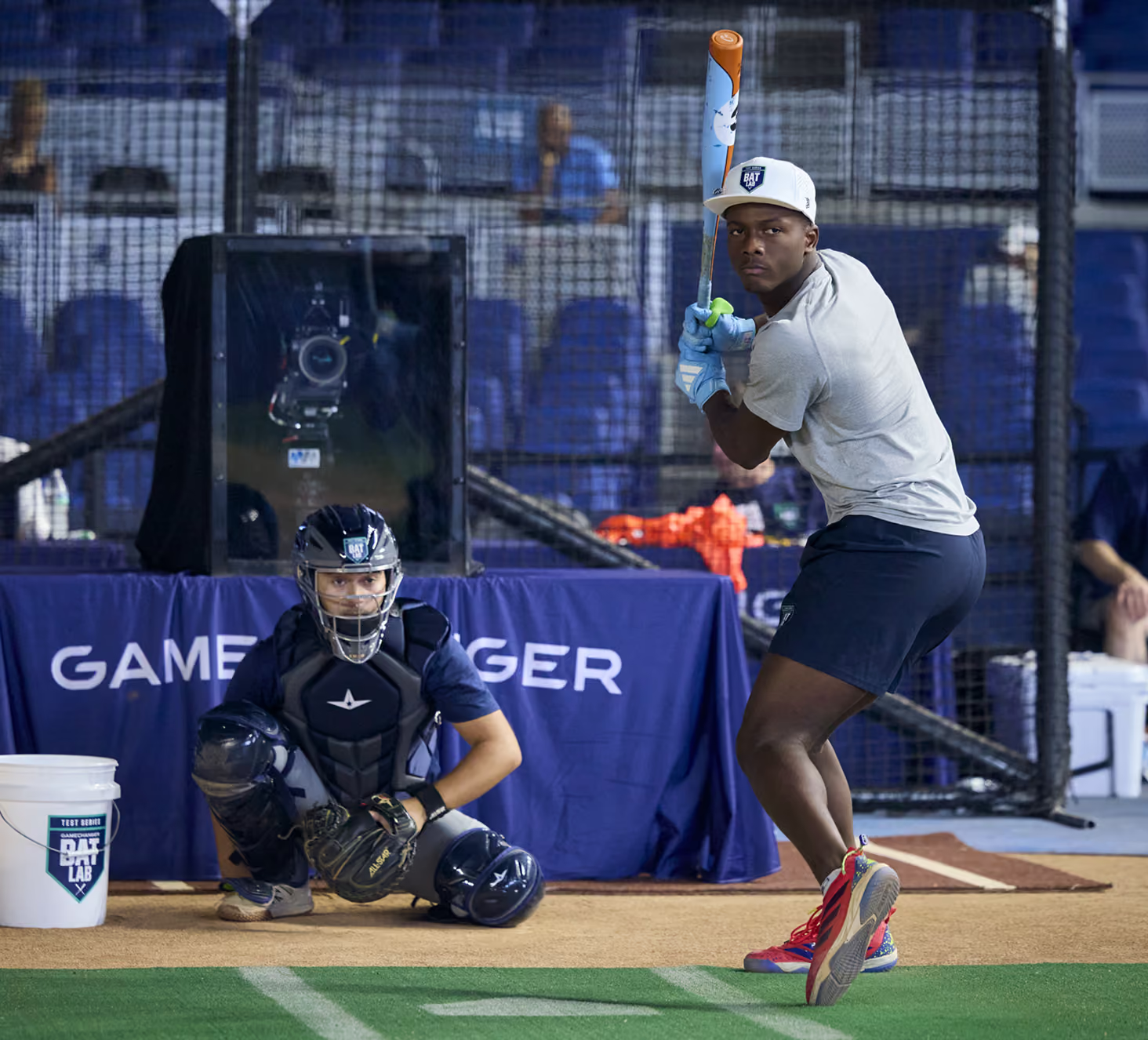
GameChanger Bat Lab’s Rating Methodology takes the guesswork out of baseball and softball bat comparison shopping. Our ratings are calculated using data from the swings of middle school and high school-aged athletes. The metrics we collect from Trackman and Blast Motion are then aggregated by our team of expert data scientists. No subjectivity. No manufacturer influence. Only real data, to help you select the best bat for you.
One number. Three certification tiers.
The GameChanger Bat Lab Rating distills Trackman ball data, Blast Motion swing data, and Player Opinion into a single number on a 1–5 scale. That number then translates into a certification tier that gives parents and athletes a fast, reliable way to identify where any bat stands relative to everything else tested. The result is three certification tiers built entirely on data.
Gold
4.4–5.0
Elite performance across all measured categories.
SILVER
4.0–4.3
High performance across all measured categories.
Bronze
3.4–3.9
Strong performance in most measured categories.
Three data streams, one rating
Every GameChanger Bat Lab rating is built on three data streams. Trackman captures what happens to the ball.
Blast Motion captures what the bat does through the swing to the point of contact.
Player Opinion captures how athletes feel about the equipment in their hands. Together, they produce a single GameChanger Bat Lab Rating on a 1–5 scale.
.avif)
Instrumented data, not feel
Many bat evaluations rely heavily on feel. GameChanger Bat Lab relies on instrumented data from two of the most trusted performance tracking systems in the game.
Trackman and Blast Motion are the same technologies used by MLB organizations, NCAA programs, and elite travel baseball programs to measure player and equipment performance. No other youth bat evaluation source combines both systems simultaneously — one capturing what happens to the ball, the other capturing what the swing did to produce it. Together they give GameChanger Bat Lab a complete performance picture that feel-based reviews simply cannot provide.
Trackman ball data
Trackman captures ball-flight data after contact. Its portable radar and optical tracking system deploys at every GC Bat Lab testing facility, ensuring every swing across every bat is measured the same way. Consistent measurement across every bat is what makes GameChanger Bat Lab comparisons reliable. Every session produces five key ball-flight metrics.
Exit Velocity
How fast the ball leaves the bat at contact, measured in mph. This is the most direct measure of bat performance. More exit velocity means more distance potential and harder contact.
Distance
The horizontal distance the ball travels from contact to landing, measured in feet. Distance is the outcome exit velocity creates.
Sweet Spot Rate
The percentage of swings that produce a launch angle between 8° and 32°. This range is the productive contact zone. Balls hit in this window become line drives, hard grounders, and extra-base hits. A bat with a high sweet spot rate is more forgiving, rewarding slightly off-center contact with quality outcomes.
Hard Hit Rate
Hard Hit Rate tracks how often a hitter generates exit velocity 8% or more above their personal average across all bats tested. This is a GameChanger Bat Lab-specific threshold, not MLB’s Statcast standard, which uses a fixed 95 mph cutoff. Our relative threshold makes Hard Hit Rate meaningful across age groups and skill levels, identifying the swings that represent genuinely strong contact for that specific athlete.
Barreled Rate
Barreled Rate captures the swings that do both, landing in the sweet spot range and producing exit velocity 11% or more above average. The higher threshold reflects the compound nature of the metric: quality contact location and elevated exit velocity together.
Blast Motion swing data
Blast Motion sensors attach to the knob of the bat and capture the mechanics of the swing itself. Ball-flight data tells us the outcome. Swing data tells us why it happened. Three key metrics come out of every swing using Blast Motion.
Bat Speed
Barrel speed at the moment of impact, measured in mph. Higher bat speed creates higher exit velocity potential and helps identify bats that move faster through the zone.
Peak Hand Speed
The maximum speed of the hitter's hands during the swing, recorded before contact. Hand speed is a key driver of bat speed and overall swing efficiency.
Time to Contact
How long it takes from the start of the downswing to contact, measured in seconds. A shorter time to contact means more plate coverage and a later decision point, giving the hitter more time to read the pitch
Player Opinion
Immediately after being at the plate, we ask players their opinion about the bat. Though measured data is critical, GameChanger Bat Lab believes that athlete opinion matters as well
Balance
Measures how the bat’s weight feels during the swing. Players rate whether the bat feels evenly distributed, end-loaded, or easy to control through the zone. A well-balanced bat can help athletes stay on time and maintain a consistent swing path.
Feel
Captures the overall comfort and response of the bat. Players evaluate how the bat feels in their hands before, during, and after contact — including smoothness, feedback, and vibration. This helps identify bats that feel natural and confidence-building at the plate.
Contact
Measures how the bat feels when it meets the ball. Players rate the quality of contact, including how solid, responsive, or powerful the bat feels at impact. This helps capture the hitter’s perception of how well the bat transfers energy to the ball.
Control
Measures how easy it is for the player to command the bat through the swing. Players evaluate whether they can get the barrel where they want it, adjust to different pitches, and stay in control from load to contact.
Sweet Spot
Measures how forgiving the bat feels on contact. Players rate how large and responsive the hitting area feels, especially when contact is not perfectly centered. A higher sweet spot rating suggests the bat feels more forgiving across the barrel.
Sound
Captures the player’s reaction to how the bat sounds at contact. While sound does not determine performance on its own, it can influence confidence and perception. Players rate whether the bat produces a clean, powerful, and satisfying sound when squared up.
The player is the constant. The bat is the variable.
No two athletes swing exactly the same — a bat that adds exit velocity for one player may not for another. So our methodology starts by establishing a personal baseline for each athlete.
1 · Every Swing Is Different
At GameChanger Bat Lab, we know that no two athletes swing exactly the same. A bat that helps one player generate more exit velocity may not have the same effect for another player. That’s why our methodology starts by establishing a personal baseline for each athlete.
2 · Your Baseline Comes First
During a Bat Lab testing session, each player swings every bat in the test group. We calculate that athlete’s average performance across all of their swings in the session, then measure each individual bat against that player’s own baseline.
3 · Impact, Not Raw Power
This allows us to evaluate the relative impact of each bat for that specific athlete, rather than simply rewarding the bats used by the strongest or most advanced players.
4 · Performance Lift in Action
For example, if a high school varsity player tests 10 bats and averages 90 MPH exit velocity across the full session, that becomes his session baseline. If that same player averages 95 MPH exit velocity with Bat Z, then Bat Z produced a +5 MPH lift relative to his baseline.
5 · Baseline-Adjusted Ratings
Our data science team uses this same baseline-adjusted approach across Bat Lab’s measured performance metrics. Each bat’s performance is translated into a 1–5 rating based on the marginal improvement or decline it creates relative to each athlete’s baseline.
6 · Measure the lift
Finally, we aggregate results across all athletes and swings in the session to calculate the final Bat Lab rating. This gives us a clearer, more objective view of how each bat performs across real players — not just how it performs for one hitter.
+5 mph
If a varsity player averages 90 mph exit velocity across 10 bats, that's his session baseline. If he averages 95 mph with Bat Z, that bat produced a +5 mph lift relative to his baseline. We apply this baseline-adjusted approach across every measured metric — so a bat earns its rating on the improvement it creates, not on which players happened to swing it.
The single source of truth for youth bats
Elite programs have always had access to this level of performance data. The coaches, scouts, and organizations competing at the highest levels of the game have long used instrumented testing, player-specific metrics, and weighted formulas to make equipment decisions. Youth athletes didn’t have that.
GameChanger Bat Lab was built to change that. Not as one of many bat review sources, but as the single source of truth and transparency. The place where youth athletes and their families come first, where the data is built around the player, and where every rating reflects a real swing from a real athlete competing at the level the bat was designed for.
Frequently asked questions
GameChanger Bat Lab is operated by GameChanger, a DICK’S Sporting Goods company. Bat Lab may link to DICK’S Sporting Goods product pages, and GameChanger and/or DICK’S Sporting Goods may receive revenue, referral value, or other business benefit from purchases made through those links. Bat Lab ratings are not pay-to-play. Bat manufacturers cannot pay to influence our ratings, and each bat is evaluated using the same testing methodology.
Bat Lab is different because our ratings are built on real athlete testing and instrumented data — not one person’s opinion. We use tools like TrackMan and Blast Motion to measure ball flight, swing metrics, and player feedback across bats, then turn those inputs into clear ratings and recommendations. That helps players, parents, and coaches compare bats more objectively and find the right bat for their swing.
BBCOR bats are tested by high school and college-aged baseball players. USSSA bats are tested by baseball players aged 10u to 13u. Softball bats are tested by high school, collegiate, and professional softball players. The data collected reflects real swings from real athletes competing at the levels these bats are designed to serve.
We host multiple Bat Lab bat testing events each year, throughout the country. Email BatLab@gc.com with the subject: “Bat Lab Testing Inquiry + [Your Age] + [Bat Drop]” for more information.